Gut Health
Your gut may be affecting much more than your digestion

Why can it influence immunity, inflammation, metabolism and emotional health?
Many people live every day with:
-
bloating;
-
constipation;
-
anxiety;
-
fatigue;
-
binge eating;
-
low immunity;
-
difficulty concentrating;
-
persistent inflammation;
-
a feeling of a ‘heavy’ body.
Even so, tests often appear normal. In many cases, the gut may be silently contributing to these imbalances.
For many years, the gut was seen only as a digestive organ responsible for absorbing nutrients and eliminating waste. Today we know this view is incomplete. Modern science recognizes the gut as one of the body's main regulatory centers, with a direct impact on the immune system, metabolism, the brain, hormonal balance and inflammatory processes.
Recent studies show that changes in the gut microbiota are associated with several clinical conditions, including obesity, insulin resistance, autoimmune diseases, anxiety, depression, chronic fatigue and low-grade inflammation. For this reason, caring for the gut is no longer just a digestive strategy. It has become a systemic health strategy.
This approach does not replace conventional medicine. On the contrary, it broadens the understanding of the causes of symptoms and allows more personalized and safer therapeutic strategies.
In integrative medicine, the gut is not treated in isolation. It is understood as part of an interconnected system that involves the gut microbiota, the gut-brain axis, intestinal permeability, energy metabolism, systemic inflammation and neuroendocrine regulation.
The gut silently communicates with the brain, metabolism and immunity
When the gut loses its balance, different body systems can be affected.
In clinical practice, many people come in reporting bloating, fatigue, anxiety, binge eating and a persistent feeling of inflammation, even after several apparently normal tests.
An integrative evaluation can help investigate possible inflammatory, metabolic, hormonal and microbiota-related factors.
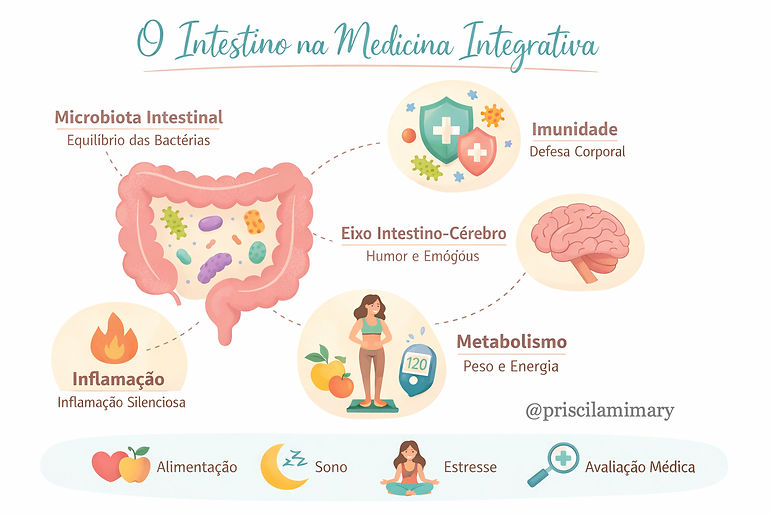
The gut and Immunity
Approximately 70% of the immune system's cells are located in the gastrointestinal tract. This concentration exists because the gut is the main interface between the body and the external environment. Every day, the digestive system comes into contact with:
-
food
-
environmental toxins
-
microorganisms
-
bacterial metabolites
-
food antigens
A balanced microbiota contributes to:
-
regulation of the inflammatory response
-
antibody production
-
protection against infections
-
maintenance of the intestinal barrier
On the other hand, gut changes may be associated with greater susceptibility to respiratory infections and recurrent inflammatory processes.
It is important to emphasize that gut modulation does not replace vaccines or conventional medical treatment. It acts as a complementary strategy to support immunity.
To maintain balance, the body needs to distinguish safe substances from potential threats. This function is performed by the gut immune system.
When this system works properly, it promotes immune tolerance. When dysfunction occurs, low-grade systemic inflammation may arise. This silent inflammation is associated with:
-
persistent fatigue
-
muscle aches
-
hair loss
-
metabolic changes
-
somatic anxiety
-
difficulty losing weight
-
hormonal changes
Integrative medicine considers these signs as possible manifestations of gut imbalance.
The gut and Metabolism
The gut microbiota influences energy metabolism through different mechanisms:
-
production of short-chain fatty acids
-
modulation of insulin sensitivity
-
regulation of fat storage
-
interaction with gut hormones
Changes in these processes may affect:
-
weight gain
-
difficulty losing weight
-
binge eating
-
insulin resistance
Integrative medicine considers the gut one of the components of overall metabolic balance.

The gut-brain axis
Communication between the gut and the brain takes place through the so-called gut-brain axis. This system involves:
-
the vagus nerve
-
inflammatory cytokines
-
bacterial metabolites
-
gut hormones
-
neurotransmitters
The gut microbiota takes part in the production of substances such as serotonin, dopamine and GABA. Changes in this axis may influence:
-
mood
-
sleep
-
memory
-
attention
-
stress response
-
pain sensitivity
Studies suggest that gut changes may contribute to emotional symptoms even when laboratory tests are normal.
In integrative medicine, this relationship is considered during the clinical evaluation of persistent nonspecific symptoms.

Gut and inflammation
Low-grade intestinal inflammation can occur even in the absence of classic gastrointestinal diseases. This process may be associated with:
-
ultra-processed diet
-
sleep deprivation
-
chronic stress
-
sedentary lifestyle
-
environmental exposure
-
frequent antibiotic use
-
hormonal changes
When persistent, this inflammation may contribute to increased circulating pro-inflammatory cytokines. This phenomenon has been linked to:
-
insulin resistance
-
chronic fatigue
-
difficulty concentrating
-
metabolic changes
-
higher cardiovascular risk
The integrative approach seeks to identify contributing factors and promote safe strategies to modulate inflammation.
Probiotics: benefits and limits
Probiotics are live microorganisms that may provide benefits when administered in adequate amounts. Studies show efficacy in:
-
irritable bowel syndrome
-
antibiotic-associated diarrhea
-
functional constipation
-
some inflammatory bowel conditions
However, not all probiotics have the same effects. The choice depends on:
-
the bacterial strain
-
the dose
-
the duration of use
-
the clinical condition
Indiscriminate use may bring no benefit. In immunosuppressed patients, it should be evaluated with caution.

Prebiotics and dietary fiber
Prebiotics are substrates that are selectively used by the body's microorganisms and confer a health benefit, according to the consensus definition of the International Scientific Association for Probiotics and Prebiotics (ISAPP).
In practice, they include certain fibers, such as inulin, fructo-oligosaccharides and galacto-oligosaccharides, found in foods such as onion, garlic, leek, oats, legumes and green banana.
The fermentation of these fibers in the colon produces short-chain fatty acids, such as butyrate, which are associated with the integrity of the intestinal barrier and the regulation of the inflammatory response.
Not all fiber is prebiotic, and intake should be increased gradually, as it can cause abdominal bloating, especially in people with irritable bowel syndrome.


When to investigate the gut more thoroughly
Some signs indicate the need for a medical evaluation:
-
persistent abdominal pain
-
change in bowel habits
-
unintentional weight loss
-
gastrointestinal bleeding
-
anemia
-
chronic diarrhea
-
family history of bowel disease
In these cases, specific tests may be needed.
Integrative strategies for gut care
The integrative approach to the gut includes interventions based on scientific evidence and clinical personalization. The main strategies include:
-
a fiber-rich diet
-
fewer ultra-processed foods
-
adequate sleep
-
regular physical activity
-
stress management
-
judicious use of probiotics when indicated
-
correction of nutritional deficiencies
This approach may help improve quality of life when applied with clinical judgment and a scientific basis.
None of these strategies should be applied in a standardized way without a medical evaluation.
Each body responds differently.
As shown, when the gut loses its balance, different body systems may be affected, including sleep, immunity, metabolism and emotional health.
An integrative evaluation can help investigate possible inflammatory, metabolic and microbiota-related factors.
1. Can the gut influence anxiety? Yes. The gut-brain axis takes part in regulating mood-related neurotransmitters.
2. Do probiotics work for everyone? No. The response depends on the strain used and the clinical condition.
3. Can constipation cause inflammation? It may contribute to discomfort and metabolic changes, but it should be evaluated individually.
4. Is there a test to assess the gut microbiota? Some tests exist, but not all of them have validated clinical use.
5. Does diet influence the microbiota? Yes. Diet is one of the main modulators of the gut microbiota.